

Ibrahim Muntaqa Tijjani Usman, PhD
Tagline:Environmental Engineering and Management Researcher | Specialist
About Me
Hello, I'm Ibrahim Muntaqa Tijjani Usman, PhD, a researcher working at the intersection of sustainable water treatment, environmental systems analysis, and circular-economy development.
My early research focused on green water-treatment technologies, including a patented microwave-grafted plant-based coagulant capable of achieving high turbidity removal with significantly reduced sludge generation. I’m drawn to solutions that balance performance, cost, and environmental responsibility, and much of my work combines laboratory innovation with Life Cycle Assessment (LCA) and Techno-Economic Analysis (TEA).
I hold a PhD in Environmental Engineering & Management from Universiti Teknologi PETRONAS, an MSc in Water & Environmental Engineering from the University of Surrey, and a BEng in Irrigation Engineering from Bayero University Kano. Alongside research, I have taught courses spanning hydraulics, hydrology, water supply engineering, agricultural waste management, and renewable-energy technologies—experiences that have shaped how I think about systems, sustainability, and real-world impact.
I am currently a Postdoctoral Research Associate at Universiti Teknologi PETRONAS, working on the iRECYCLE-Malaysia project. This international initiative aims to improve Malaysia’s solid-waste management ecosystem through digital traceability, data integration, and evidence-based circular-economy strategies. My contribution focuses on sustainability assessments, modelling, and translating research into practical insights for stakeholders.
You’ll find my publications, projects, and collaborations here, each reflecting a commitment to cleaner technologies, informed decision-making, and sustainable development.
Research Interests
- Sustainable Water and Wastewater Treatment
- Life Cycle Thinking & Circular Economy in Water Treatment
- Energy-Water Nexus & Renewable Energy Applications
- Advanced Materials & Smart Water Technologies
- Climate Resilience & Water Security
Education
Doctor of Philosophy (PhD)
from: 2021, until: 2025Field of study:Civil Engineering-Environmental Engineering and Management School:Universiti Teknologi PETRONAS (UTP)Location:Seri Iskandar, Perak, Malaysia
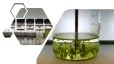
DescriptionAccess to clean and safe drinking water remains a fundamental challenge in many parts of the world, especially in developing regions where conventional water treatment chemicals are costly and sometimes hazardous to health and the environment. My PhD research focuses on developing and optimizing three novel plant-based natural coagulants (PBNCs) as sustainable alternatives to chemical and synthetic coagulants for drinking water treatment. The study aims to enhance water treatment efficiency while promoting eco-friendly solutions that reduce chemical contamination risks and align with global sustainability goals. Chemical coagulants, such as aluminium sulphate (alum) and polyaluminum chloride (PAC), are widely used in water treatment for particle and turbidity removal. However, their prolonged use has been associated with negative health effects, including Alzheimer’s disease and increased sludge production, which contributes to environmental pollution. In contrast, plant-based coagulants offer a biodegradable and safer alternative, harnessing natural bioactive compounds to facilitate flocculation. In response to these concerns, my research explores the extraction, modification, and characterization of three plant-based coagulants derived from locally available plant species, particularly those found in Southeast Asia, where natural coagulants have a history of traditional use. The selection of plants was guided by availability, cost-effectiveness, and high coagulation efficiency, ensuring practical application in real-world water treatment scenarios.
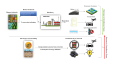
The study employed microwave-assisted grafting copolymerization, an eco-friendly and highly efficient modification technique to enhance the performance of the plant-based coagulants. This technique was chosen for its ability to increase grafting efficiency, reduce reaction time, minimize chemical usage, and offer greater control over molecular modifications. The modified coagulants were tested on synthetic and real water samples to evaluate their efficiency in removing turbidity, natural organic matter, and microbial contaminants. Key analyses conducted include jar tests to determine coagulation performance in varying pH and turbidity conditions; sludge Volume Index (SVI) to assess sludge production and settleability; antimicrobial analysis to compare microbial reduction efficacy between PBNCs and conventional coagulants like alum; toxicological analysis (LC50 tests) to evaluate the impact of coagulants on terrestrial plants and aquatic organisms, ensuring environmental safety; lifecycle assessment (LCA) evaluating their environmental impact; and Technique for Order Preference by Similarity to Ideal Solution (TOPSIS) for a comparative ranking of the coagulants based on multi-criteria decision analysis.
The research yielded promising results, with the modified plant-based coagulants demonstrating high turbidity and microbial removal efficiencies comparable to or exceeding those of conventional coagulants. Key findings include superior coagulation efficiency: The optimized PBNCs achieved turbidity reductions of over 99%, with improved performance in acidic to neutral pH ranges; reduced sludge production: Compared to chemical coagulants, the PBNCs generated lower sludge volumes, making disposal more manageable and reducing treatment costs; antimicrobial properties: Unlike synthetic coagulants, PBNCs exhibited antimicrobial activity with 100% E. coli removal, further enhancing water quality resulting in lesser dosage of disinfection chemicals; non-toxic and environmentally friendly: Toxicological assessments confirmed that the PBNCs were safe for aquatic ecosystems and plant growth, making them ideal for sustainable water treatment applications.
This research highlights the potential of plant-based natural coagulants (PBNCs) as cost-effective, sustainable, and environmentally friendly alternatives to chemical coagulants in drinking water treatment, aligning with circular economy principles and net-zero carbon emission goals. Future work should focus on scaling up production, optimizing storage stability, integrating PBNCs into existing treatment systems, to further validate their commercialisation potentials and environmental benefits.Professional Diploma In Education (PDE)
from: 2016, until: 2017Field of study:EducationSchool:Ahmadu Bello UniversityLocation:Federal College of Education, Kano, Nigeria
DescriptionIn 2016, I embarked on a transformative academic journey by enrolling in the Professional Diploma in Education (PDE), a specialized one-year program affiliated with Ahmadu Bello University, Zaria, Nigeria, and delivered by the Federal College of Education, Kano, Nigeria. This program was designed to equip educators with the foundational and advanced pedagogical skills required for effective teaching, curriculum development, and student engagement in higher education.
Throughout the program, I was exposed to a broad spectrum of instructional methodologies, assessment techniques, and psychological principles essential for fostering an interactive and student-centered learning environment. The curriculum encompassed key areas such as university curriculum development, where I gained insights into structuring academic programs that align with contemporary educational standards and evolving industry needs. Additionally, courses in psychology in education deepened my understanding of cognitive processes, motivation, and learning behaviors, enabling me to tailor my teaching strategies to diverse student needs.
Another crucial aspect of my training was assessment in tertiary schools, where I developed proficiency in designing fair, reliable, and effective evaluation systems that measure both cognitive and practical competencies. I also explored cognitive and psychomotor learning, focusing on enhancing critical thinking, problem-solving, and hands-on skills in students—essential attributes for real-world application. Furthermore, the history of the university education module provided a comprehensive perspective on the evolution of higher education systems, shaping my approach to modern teaching methodologies and academic leadership.
At the culmination of the program, I undertook rigorous examinations and successfully passed with merit, solidifying my competency in academic instruction and student mentorship. This qualification, combined with my extensive research background, has significantly enhanced my effectiveness as a university lecturer. It has empowered me with the ability to design engaging curricula, apply innovative teaching techniques, and conduct impactful student assessments, all while fostering an environment of critical inquiry, intellectual growth, and professional development.
This experience has not only reinforced my passion for academia but has also positioned me as an educator committed to nurturing the next generation of scholars, researchers, and industry leaders. As I continue my academic career, I remain dedicated to advancing teaching excellence, integrating research with pedagogy, and contributing to the evolution of higher education.
Master of Science (MSc)
from: 2014, until: 2015Field of study:Water and Environmental EngineeringSchool:University of SurreyLocation:Guildford, Surrey, UK
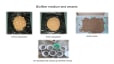
DescriptionWienerberger Brickmaking Industry (located at Warnham, Surrey, UK) uses a huge amount of water, which is mostly drawn from the public water supply network. In 2010, their water consumption was 2.2 million m³, with 54% drawn from the public supply network. In 2012, it rises to 3.2 million m³ with 45% from the public supply network. Between 2010 and 2012, water consumption rose by 21%; however, public network withdrawal decreased from 54% to 45%. Their goal is to reduce the share of water drawn from the public supply network to 40% by 2020 (Wienerberger AG, 2012). The goal of the research was to evaluate the extent of pollution onsite and the potential pollutant present and to suggest a treatment technique suitable for treating their wastewater to the level they can reuse it in the manufacturing process, thus completely stopping the withdrawal of water from the public water supply network. To achieve the latter, samples were collected from different points (A to SF), with a focus on process wastewater (point C), which is raw process wastewater, and point D, which is a pre-treated process wastewater by sedimentation. An analysis on potential parameters of concern was carried out onsite and at the Centre for Environmental Health Engineering (CEHE), Faculty of Engineering and Physical Science, University of Surrey. Results were recorded, and averages of the focused points C and D were calculated and compared with the Thames Water, WHO, BSR, and EA standard values to determine by how much the pollutants measured are above or below the standard values.
Results were studied, and it was concluded that wastewater pollution is mostly due to high levels of suspended solids, which makes the wastewater opaque (muddy). Though some other inorganic pollutants were present (e.g., barium, sulfate, etc.), the wastewater can be treated to the level it can be reused in the manufacturing processes of bricks. A combined treatment technique was suggested, which incorporates enhanced coagulation flocculation and a membrane filtration system.Bachelor of Engineering (BEng)
from: 2006, until: 2012Field of study:Irrigation EngineeringSchool:Bayero University, Kano
DescriptionWater scarcity is an increasingly pressing global issue, driven by population growth and climate change. One sustainable approach to mitigating this challenge is the reuse of grey water, which includes wastewater from baths, sinks, and laundry (excluding toilet waste). This project focuses on the design and implementation of a grey water irrigation system using a bio-sand filter, aiming to reduce the demand for fresh water in home gardens while ensuring environmental sustainability. Grey water constitutes a significant portion of household wastewater, making up approximately 50-80% of residential water use. Instead of being discarded, it can be repurposed for irrigation, benefiting plants while conserving drinking water. However, untreated grey water contains organic matter, detergents, and potential pathogens, which necessitate filtration before use. To address this, the project designed a bio-sand filtration system capable of effectively treating grey water for irrigation purposes.
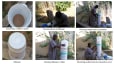
The methodology involved three primary components: raw grey water collection, filtration, and treated water storage. The source of grey water for this study was laundry water, which typically generates around 100 litres per use. The filtration system was carefully constructed using layers of gravel, sand, and a biological layer that promotes the breakdown of organic contaminants. A bio-sand filter was selected due to its cost-effectiveness, simple maintenance, and high efficiency in removing suspended solids and pathogens.
To assess the performance of the system, key parameters such as flow rate and turbidity were analysed. The measured flow rate of 0.43 litres per minute was found to be within the acceptable range for bio-sand filters, ensuring a steady supply of treated water for irrigation. Additionally, the system successfully reduced turbidity from 1925 NTU (raw grey water) to 21 NTU (filtered water), achieving an impressive 99% removal efficiency. These results confirmed the effectiveness of the filtration process in removing impurities and improving water quality. The treated grey water was then distributed to plants through an irrigation network, designed to optimize water usage while preventing contamination. To ensure safe application, the system was used for fruit trees and non-leafy edible plants, minimizing direct contact with consumable parts. The study also recommended the use of a sedimentation step before filtration, as this would further reduce suspended solids, preventing clogging and extending the lifespan of the filter.
In conclusion, this project successfully developed a low-cost, efficient, and sustainable method for reusing grey water in home irrigation. The integration of a bio-sand filter proved to be an effective solution for reducing household water consumption, recharging groundwater, and promoting sustainable irrigation practices. By implementing such systems, households can contribute to water conservation efforts while maintaining productive and eco-friendly gardens. This project highlights the potential of greywater recycling as a viable approach to addressing water scarcity and fostering environmental sustainability.



Work Experiences
Lecturer
from: 2021, until: presentOrganization:Bayero University, KanoLocation:Kano State, Nigeria
Graduate Research Assistant
from: 2021, until: 2024Organization:Universiti Teknologi PETRONASLocation:Perak, Malaysia
Assistant Lecturer
from: 2018, until: 2021Organization:Bayero University, KanoLocation:Kano State, Nigeria
Teachings
Solid Waste Engineering and Air Pollution
From: 2025, Until: present
Organization:Bayero University KanoField:Agricultural and Environmental Engineering
Description:Integrated solid waste management (ISWM), IoT-based solid waste management, composting, pyrolysis, and anaerobic digestion.
Design and fabrication of air quality sensors. Planning, designing, implementation, monitoring, and modelling of air quality system.Environmental Engineering and Wastewater Analysis Laboratory
From: 2022, Until: 2024
Organization:Universiti Teknologi PETRONASField:Environmental Engineering
Description:Volumetric analysis, TSS, MLSS, and MLVSS
Spectrophotometry, total nitrogen, nitrate, ammonia, and phosphorus
Heavy metal analysis
Batch settling filtration column analysis
Sedimentation tank unit analysis
Wastewater sampling and preservation
BOD, COD, and TOC analysisSolid Waste Management
From: 2021, Until: 2024
Organization:Universiti Teknologi PETRONASField:Environmental Engineering
Description:Reduce, Reuse, Recycle: Collection, Sorting, Transportation, Treatment, etc.
Water Supply Engineering
From: 2021, Until: 2024
Organization:Universiti Teknologi PETRONASField:Environmental Engineering
Description:Design of water treatment process units: Screening, Coagulation-flocculation, Sedimentation, Filtration, Disinfection, Storage, etc.
Introduction to Renewable Energy Technologies
From: 2021, Until: 2023
Organization:Universiti Teknologi PETRONASField:Environmental Engineering
Description:Introduction to Hydro, Solar, Wind, Ocean, Geothermal, and Biomass sources of energy, their environmental impacts: the current situation, advancements, drawbacks, and future perspectives.
Agricultural Waste Management
From: 2019, Until: 2021
Organization:Bayero University KanoField:Agricultural and Environmental Engineering
Description:Agricultural solid waste management, waste to energy: Biomass conversion to biofuels, waste to wealth: composting, etc.
Land Clearing and Development
From: 2019, Until: 2021
Organization:Bayero university KanoField:Agricultural and Environmental Engineering
Description:Evaluation of contaminated land, preventions, and remediation.
Farm Electrification
From: 2018, Until: 2021
Organization:Bayero University KanoField:Agricultural and Environmental Engineering
Description:Introducing the use of renewable energy technologies in farms. Basic energy audit in agricultural farm settings, introduction to electricity and electronics, etc.
Hydraulics
From: 2018, Until: 2021
Organization:Bayero University KanoField:Agricultural and Environmental Engineering
Description:Introduction to flows in open and closed channels and how they apply to agricultural and environmental engineering, hydraulic jumps, types of flows and energy dissipation, and how they affect irrigation infrastructures, etc.
Engineer in Society: Introduction to Engineering Economics
From: 2018, Until: 2021
Organization:Bayero University KanoField:Agricultural and Environmental Engineering
Publications
EFFECT OF RESERVOIR UTILIZATION AND OTHER ANTHROPOGENIC ACTIVITIES ON THE HADEJIA RIVER VALLEY FLOODS: A REVIEW
Journal ArticlePublisher:FUDMA JOURNAL OF SCIENCESDate:2023Authors:NJ ShanonoML AttandaNM NasidiZakari MDA IbrahimMN YahyaIMT UsmanAH AbdullahiSI UmarComprehensive Review of Modification, Optimisation, and Characterisation Methods Applied to Plant-Based Natural Coagulants (PBNCs) for Water and Wastewater Treatment
Journal ArticlePublisher:SustainabilityDate:2023Authors:Ibrahim Muntaqa Tijjani UsmanYeek-Chia HoLavania BalooMan-Kee LamPau-Loke ShowWawan SujarwoContinuous-Flow Grafting of LENFLOC™ Coagulant for Water Treatment toward Circular Economy
Journal ArticlePublisher:WaterDate:2023Authors:Ibrahim Muntaqa Tijjani UsmanYeek-Chia HoMan-Kee LamPau-Loke ShowWawan SujarwoEvaluation of annona diversifolia seed extract as a natural coagulant for water treatment
Journal ArticlePublisher:SustainabilityDate:2023Authors:Ibrahim Muntaqa Tijjani UsmanFoo-Wei LeeYeek-Chia HoHan-Ping KhawQi-Wen ChongYong-Ming KeeJun-Wei LimPau-Loke ShowA comprehensive review on the advances of bioproducts from biomass towards meeting net zero carbon emissions (NZCE)
Journal ArticlePublisher:Bioresource TechnologyDate:2022Authors:Ibrahim Muntaqa Tijjani UsmanYeek-Chia HoLavania BalooMan-Kee LamWawan SujarwoComparative Analysis for Irrigation Water Application Methods Using TOPSIS
Journal ArticlePublisher:Application of Multi-Criteria Decision Analysis in Environmental and Civil EngineeringDate:2021Authors:Mukhtar Nuhu YahyaIbrahim Muntaqa Tijjani UsmanHüseyin GökçekuşDilber Uzun OzsahinBerna Uzun1Department.(2020). Effects of Deficit Irrigation and Mulch Practices on Yield and Yield Response Factors of Tomato (Lycopersicon esculentum) at Kano River Irrigation Project (KRIP), Kano-Nigeria
Journal ArticlePublisher:Bayero Journal of Engineering and Technology (Bjet, 14 (May), 18Date:2020Authors:MD ZakariI AuduHE IgbadunNM NasidiNJ ShanonoA IbrahimD MohammedAA SaboIMT UsmanEffect of Plant Spacing on Dry Matter Yield and Proximate Composition of Irrigated Columbus Grass (Sorghum almum)
Journal ArticlePublisher:Nigerian Journal of Animal Science and Technology (NJAST)Date:2020Authors:IA GumelM BabaSI AbdurrahamanAA IbrahimI BabangidaIZ KiriAU AdamuB BabandiI UsmanStakeholders conflict and infrastructural decay In Nigerian irrigation schemes: A review
Journal ArticlePublisher:Nigeria journal of engineering science and technology ResearchDate:2020Authors:NJ ShanonoMM BelloMD ZakariA IbrahimIMT UsmanNM NasidiMM MainaSocio-hydrological study of water users’ perceptions on the management of irrigation schemes at tomas irrigation project, Kano, Nigeria
Journal ArticlePublisher:Nig J. Eng, Sci & tECHDate:2019Authors:NJ ShanonoNM NasidiMM MainaMM BelloA IbrahimSI UmarIM Tijani UsmanMD Zakari
Projects
Life Cycle Assessment of Conventional Water Treatment Plant
date: 2024Organization:Universiti Teknologi PETRONAS
Description:Energy and chemical audits and environmental impact assessments modelled scenarios for energy and chemical consumption efficiencies. OpenLCA was used for the analysis.
Development of Natural Coagulant for Water Treatment
date: 2021Organization:Universiti Teknologi PETRONAS
Description:In this project, three plant-based natural coagulants were developed, with each achieving 99% turbidity removal from surface water with the production of less voluminous nontoxic sludge that is biodegradable.
Fluoride in Drinking water: Impact and Mitigation
date: 2014Organization:University of Surrey
Description:A state-of-the-art critical review was conducted towards the evaluation of the impacts of fluoridation of drinking water on humans, especially children.
Water Treatment Facility Location and Mapping
date: 2014Organization:University of Surrey
Description:The WMA North East Thames is deciding upon the location of a new water treatment facility with some considerations including the existence of agricultural farmland nearby, proximity to the river, excellent separation distance from town, and keeping the distance to the minimum from the town center and the urban areas. ArcGIS 10.1 was used.
Greywater Bio-sand filter for home garden irrigation
date: 2010Organization:Bayero University Kano
Description:The designed greywater bio-sand filter achieved 99% turbidity removal efficiency.
Peer Reviewing
Reviewer: Journal of Environmental Engineering
date: 2024Organization:ASCE
Reviewer: Scientific Reports
date: 2024Organization:Springer Nature
Reviewer: Clean Technologies and Environmental Policy Journal
date: 2024Organization:Springer Nature
Reviewer: Discover Water
date: 2024Organization:Springer Nature
Reviewer: Waste and biomass valorisation
date: 2023Organization:Springer Nature
Skills
- Life cycle assessment (LCA)
- Techno-economic assessment (TEA)
- Nature-based solution (NBS)
- Drinking-water and wastewater treatment
- Statistical data analysis
- Sustainable urban drainage systems
- Water resource management
- Teaching and research
- Advanced material characterization
- Biomass bioprocess biostatistics
- Sustainable practices
- Teamwork
- Curriculum development
- Microsoft office
- Organization skills
- Working with youth
- Administration
- Presentations
- Communication
Certifications
Conducting a Life Cycle Assessment (LCA) from Theory to Business Application
Issue date: May 2024,
Issued by: Universiti Teknologi PETRONAS (CAPE-UTP) .
Description:LCA for business application using Simapro and GaBi softwares.
MATLAB Onramp
Issue date: Nov 2023,
Issued by: MathWorks | Training Services .
Writing and Publishing in High Impact Journal: Trick & Tips
Issue date: May 2022,
Issued by: Universiti Teknologi PETRONAS (CAPE-UTP) .
Basic Understanding of Microalgae Cultivation for Biofuel Production
Issue date: Mar 2022,
Issued by: Universiti Teknologi PETRONAS (CAPE-UTP) .
Description:Life cycle of chlorella vargas microalgae from cultivation to harvesting.
Certificate in Environmental Sustainability
Issue date: Oct 2017,
Issued by: Alison.com .
Honors & Awards
GOT Award
date: 2025-03-20Issuer:Universiti Teknologi PETRONAS
Description:Prestigious recognition for successfully completing PhD and publication requirements within the minimum time frame.
Gold Award Winner
date: 2025-02-22Issuer:Malaysia Technology Expo (MTE) IIA 2025
Description:High performance harvesting efficiency via plant-based polymer—for protection of the environment, energy, water, wastewater, and sanitation.
Winner (Circular Economy Category) - PETRONAS CHESS Innovation Challenge 2024
date: 2024-11-27Issuer:PETRONAS
GRA Award
date: 2023-03-01Issuer:Universiti Teknologi PETRONAS (YUTP Grant)
Description:Research on water, energy, and carbon dioxide from carbon capture and storage (water treatment): A Life Cycle Assessment
GRA Award
date: 2021-12-01Issuer:Universiti Teknologi PETRONAS (FGRS Grant)
Description:Research on Natural coagulants in water treatment


Professional Membership
Grad. Eng. BEM
from: 2025, until: presentOrganization:Board of Engineers Malaysia (BEM)Location:Malaysia
Description:Graduate Environmental Engineer
GT. MBOT
from: 2025, until: presentOrganization:Malaysia Board of Technologists (MBOT)Location:Malaysia
Description:Graduate Technologist (GT)
GMICE
from: 2025, until: presentOrganization:Institution of Civil Engineers (ICE)Location:United Kingdom
Description:Graduate Member
Engineer
from: 2019, until: presentOrganization:Council for thr Regulation of Engineering in Nigeria (COREN)Location:Nigeria
Description:Registered Environmental Engineer